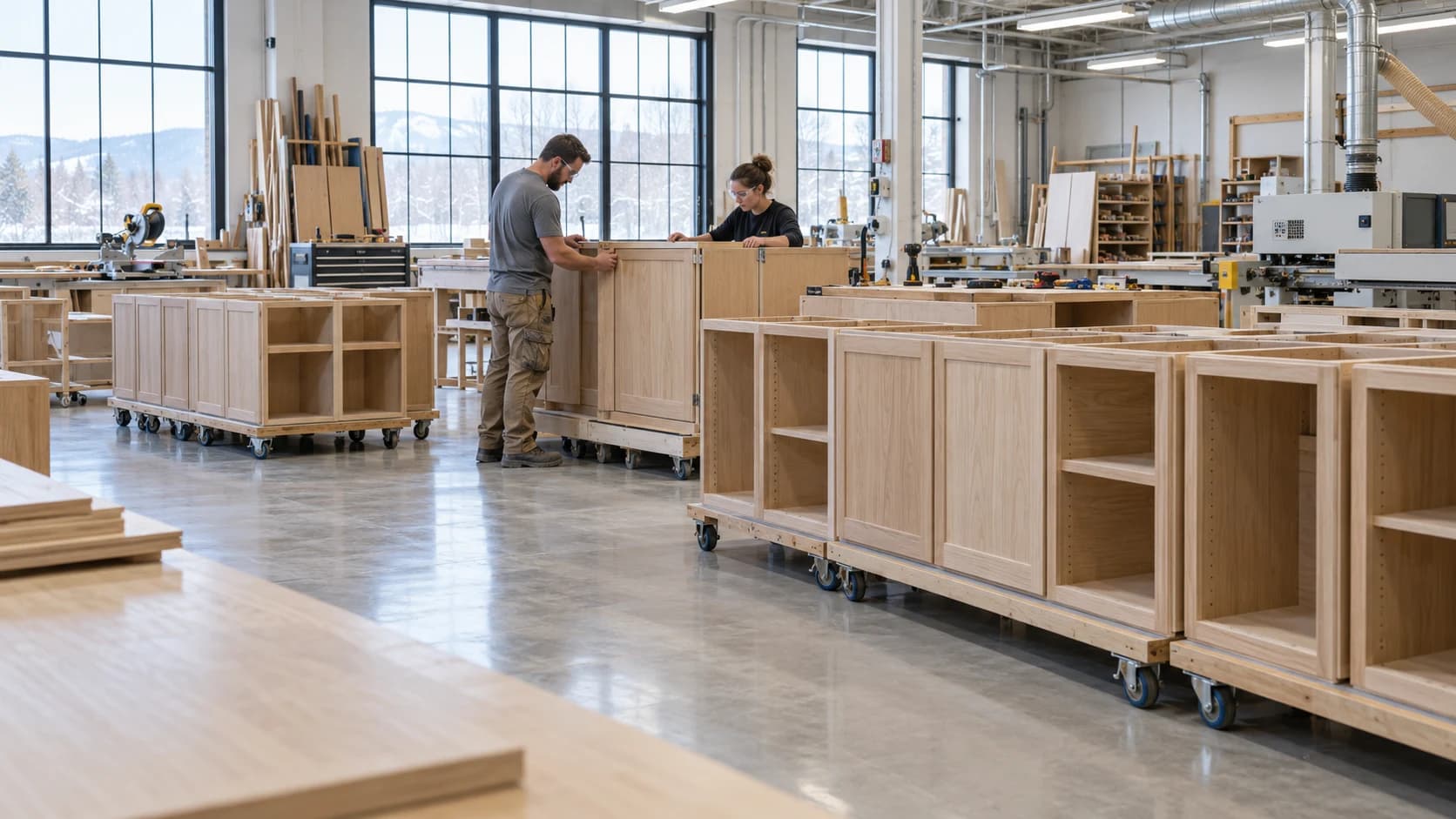
Dispatch readiness means the shipment can support the agreed next step at the site. It includes accepted products, accessories, identification, documentation, and a confirmed receiving arrangement. A clear floor area is not evidence that the order is ready to leave.
Check the release
Reconcile assemblies against the approved shipment scope.
Confirm required hardware, loose parts, templates, and documents.
Check labels, package counts, and condition records.
Verify delivery details and outstanding exceptions with the responsible people.
A practical exception
A hypothetical cabinet shipment is complete except for a filler that must be site-fitted. Record that exception and confirm the installation plan rather than letting the receiver discover it while unloading.
Close the handoff
Retain the dispatch record and reconcile delivery exceptions promptly. The next status should distinguish dispatched from received and accepted when those events differ.
A woodworking schedule is easier to review when the team can see the work already recorded. Millbase Floor Pulse shows active workers, projects, workstations, and elapsed time. Pair it with project records to discuss a delayed cabinet order with the people and work behind it, and compare logged labour with the estimate.
Ask the Millbase AI agent a question grounded in your workspace records. For example: “Who is working on this project, at which workstations, and how many hours have been recorded?” You can select a project or worker, ask follow-up questions, and request supported reports and CSV exports.
Use the breakdown to prepare the next production conversation. Current activity and recorded hours are evidence for planning; they do not by themselves prove that an assembly has passed inspection or is ready to ship.
Should the dispatcher inspect every technical detail?
Technical acceptance should happen through the appropriate quality process. Dispatch verifies that required acceptance and shipment checks are complete.
Can a shipment leave with an open punch item?
Only when the exception is understood and approved through the project process, with a clear plan for completion.
Coby Birenbaum
Writing about woodworking, millwork, and the operations behind a better-run shop.

 Reception Desks and Custom Millwork: Planning the Interfaces