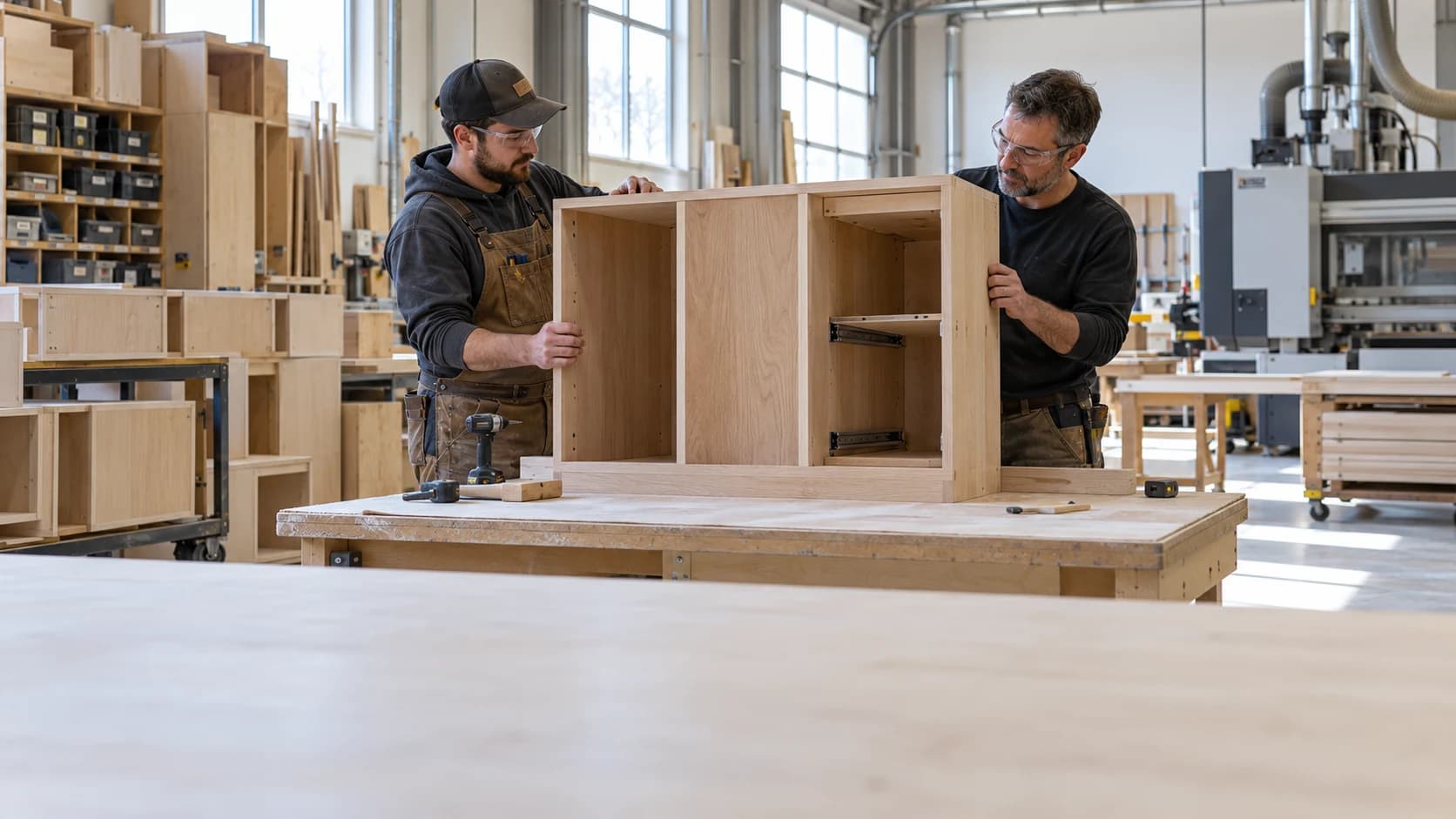
 Cabinet Shop Operations: What to Standardize First
Woodworking2 min read
Cabinet Shop Operations: What to Standardize First
Standardize the handoffs that repeatedly create confusion before documenting every activity in the business.
Archive ·Doors and drawer fronts often remain separate from their cabinet boxes through machining, finishing, and assembly.
Cabinet Door and Drawer Front IdentificationDoors and drawer fronts often remain separate from their cabinet boxes through machining, finishing, and assembly. Preserve their relationship with the destination cabinet and approved orientation. Similar dimensions make unlabeled parts especially easy to confuse.
A hypothetical drawer bank has fronts with subtly different heights. Stacking them by size alone may not preserve the intended order or finish sequence. A component identity lets assembly verify placement against the drawing.
Confirm that the accepted set matches the cabinet and that outstanding replacements remain visible. Do not mark the assembly ready solely because the box is complete.
For a cabinet or millwork project, Millbase project tracking connects the job, sub-projects, tags, recorded labour, and material costs. Pair that context with inventory records when reviewing the materials used and the work still being discussed. Keep the approved drawings and manufacturer requirements available through the shop’s established document process.
Ask the Millbase AI agent a question grounded in your workspace records. For example: “Show the recorded labour and material costs for this cabinet project, and who has worked on it.” You can select a project or worker, ask follow-up questions, and request supported reports and CSV exports.
Use the answer to prepare a focused review of the job. It does not establish hardware compatibility, approve a drawing revision, or replace a manufacturer’s instructions or the contract specification.
For the broader workflow and decisions behind this guide, read A Bill of Materials for Cabinets That Survives Production Changes.
Use an identification method compatible with the process and product requirements. Preserve identity without compromising the finish.
It should retain the original job and component connection, with a clear replacement or revision record where needed.

Writing about woodworking, millwork, and the operations behind a better-run shop.
Connect on LinkedInExplore how Millbase connects projects, people, inventory, and labor records.
Book a live demoCabinet Shop Operations: What to Standardize FirstStandardize the handoffs that repeatedly create confusion before documenting every activity in the business.
Archive ·Woodworking Process Documentation That Operators Will UseUseful process documentation supports the decision at the point of work.
Archive ·Wood Species and Finish Identity in Inventory RecordsHardwood inventory needs enough identity to support the intended appearance and fabrication requirements.
Archive ·