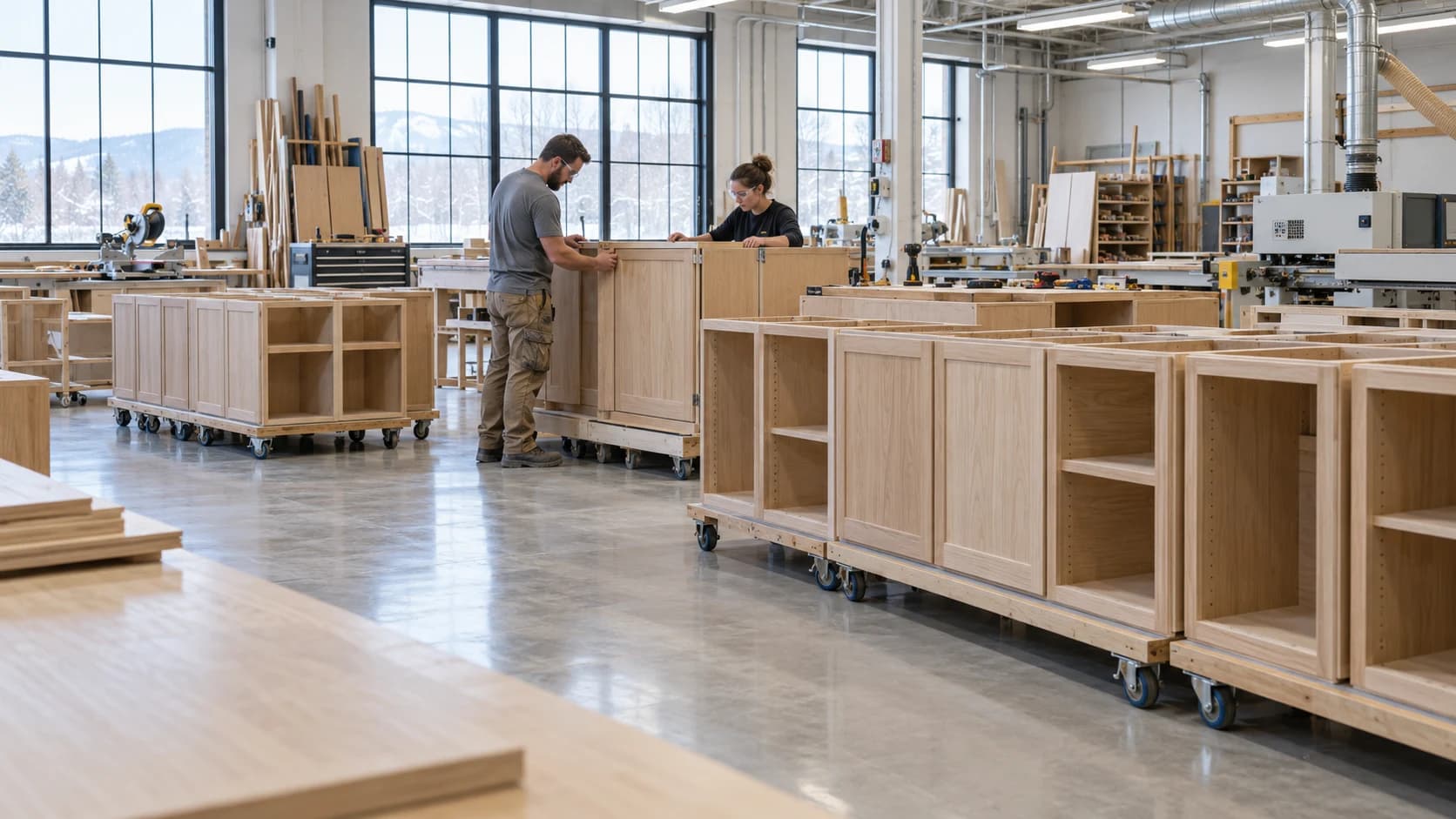
 Customer Updates Based on Actual Cabinet Job Progress
Production2 min read
Customer Updates Based on Actual Cabinet Job Progress
A useful customer update connects progress with the agreed scope and next commitment.
Archive ·Planned maintenance consumes capacity and should be visible before jobs are promised.
Managing Planned Maintenance in a Cabinet Production SchedulePlanned maintenance consumes capacity and should be visible before jobs are promised. Coordinate the schedule with the people responsible for equipment and the applicable manufacturer procedures. Do not treat maintenance as optional simply because a production queue is full.
A hypothetical CNC station is unavailable for half a day. Scheduling its normal full-day output would create a predictable shortfall. Rebalance released work and communicate the revised plan before the shift begins.
Review unplanned downtime separately from scheduled maintenance. Use the history to improve planning and reliability without improvising technical maintenance instructions.
A woodworking schedule is easier to review when the team can see the work already recorded. Millbase Floor Pulse shows active workers, projects, workstations, and elapsed time. Pair it with project records to discuss a delayed cabinet order with the people and work behind it, and compare logged labour with the estimate.
Ask the Millbase AI agent a question grounded in your workspace records. For example: “Who is working on this project, at which workstations, and how many hours have been recorded?” You can select a project or worker, ask follow-up questions, and request supported reports and CSV exports.
Use the breakdown to prepare the next production conversation. Current activity and recorded hours are evidence for planning; they do not by themselves prove that an assembly has passed inspection or is ready to ship.
For the broader workflow and decisions behind this guide, read Production Scheduling for Custom Cabinetry.
Follow the business's defined categories and costing policy. Keep equipment support distinguishable from direct customer-job work.
Use the authorized return-to-service process and qualified personnel appropriate to the equipment and work performed.

Writing about woodworking, millwork, and the operations behind a better-run shop.
Connect on LinkedInExplore how Millbase connects projects, people, inventory, and labor records.
Book a live demoCustomer Updates Based on Actual Cabinet Job ProgressA useful customer update connects progress with the agreed scope and next commitment.
Archive ·Shift Handoffs in a Woodworking FactoryA shift handoff should preserve the state of work, open problems, and the next safe authorized action.
Archive ·Production Dashboards: Show Exceptions Before TotalsA production dashboard should help the viewer decide where attention is needed.
Archive ·