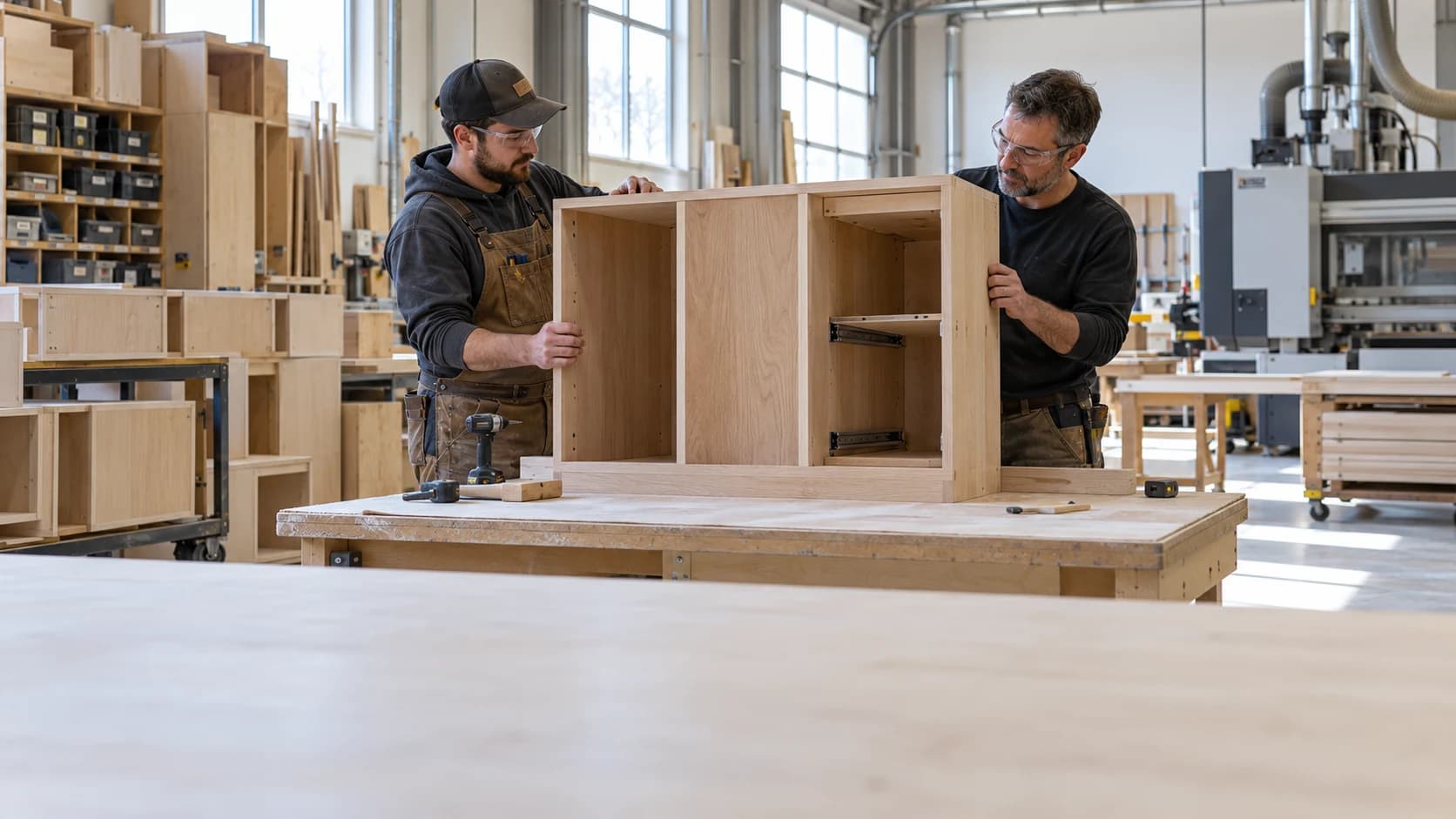
 Cabinet Shop Operations: What to Standardize First
Woodworking2 min read
Cabinet Shop Operations: What to Standardize First
Standardize the handoffs that repeatedly create confusion before documenting every activity in the business.
Archive ·A preproduction cut list review checks whether the parts represent the approved assembly and can be made from the specified material.
Cut List Errors: A Preproduction Review ChecklistA preproduction cut list review checks whether the parts represent the approved assembly and can be made from the specified material. It is cheaper to resolve ambiguity before cutting. Focus on the dimensions, orientation, and quantities that affect downstream fit.
A hypothetical left and right cabinet side share dimensions but require different machining. A list that identifies both simply as side panel may lose handedness. Add enough identity to preserve the distinction through cutting and machining.
Ask assembly to flag recurring ambiguities in the list. Improve the source requirement rather than expecting the saw operator to remember an unwritten exception.
For a cabinet or millwork project, Millbase project tracking connects the job, sub-projects, tags, recorded labour, and material costs. Pair that context with inventory records when reviewing the materials used and the work still being discussed. Keep the approved drawings and manufacturer requirements available through the shop’s established document process.
Ask the Millbase AI agent a question grounded in your workspace records. For example: “Show the recorded labour and material costs for this cabinet project, and who has worked on it.” You can select a project or worker, ask follow-up questions, and request supported reports and CSV exports.
Use the answer to prepare a focused review of the job. It does not establish hardware compatibility, approve a drawing revision, or replace a manufacturer’s instructions or the contract specification.
For the broader workflow and decisions behind this guide, read A Bill of Materials for Cabinets That Survives Production Changes.
A second check is useful for high-risk or unfamiliar work, especially when the reviewer understands the assembly and downstream operations.
Software can reduce some manual mistakes, but incorrect inputs, revisions, and assumptions still require review.

Writing about woodworking, millwork, and the operations behind a better-run shop.
Connect on LinkedInExplore how Millbase connects projects, people, inventory, and labor records.
Book a live demoCabinet Shop Operations: What to Standardize FirstStandardize the handoffs that repeatedly create confusion before documenting every activity in the business.
Archive ·Woodworking Process Documentation That Operators Will UseUseful process documentation supports the decision at the point of work.
Archive ·Cabinet Door and Drawer Front IdentificationDoors and drawer fronts often remain separate from their cabinet boxes through machining, finishing, and assembly.
Archive ·