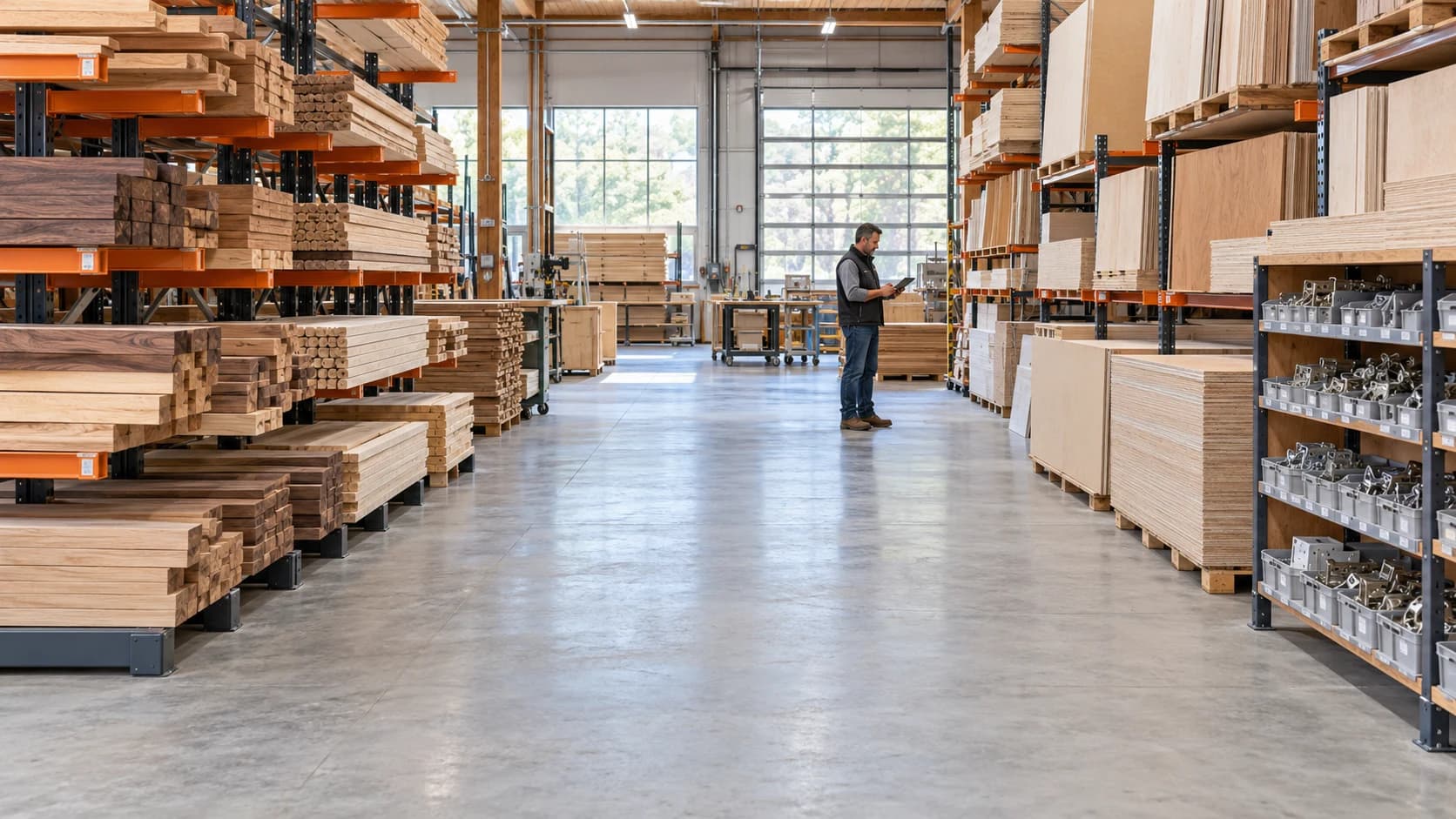
 Supplier Lead Times: Measure Arrival to Usable Stock
Inventory2 min read
Supplier Lead Times: Measure Arrival to Usable Stock
A supplier lead time should reflect when the shop can actually use the material.
Archive ·Lead time and cycle time answer different operational questions.
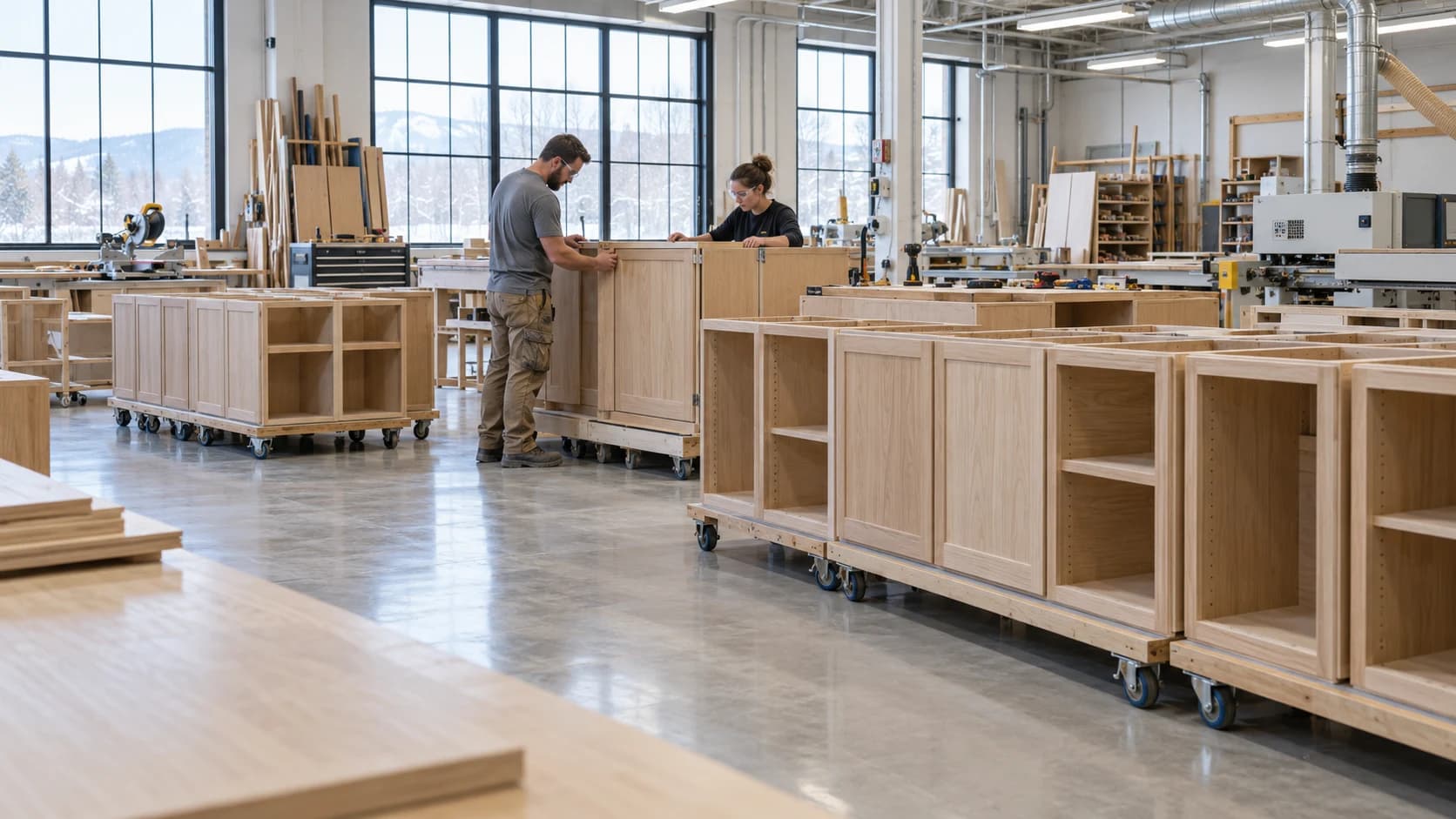 Production Lead Time vs Cycle Time in Woodworking
Lead time and cycle time answer different operational questions. A customer experiences the elapsed time until delivery, while a station may measure the time required to process a unit or batch. Define the start, finish, unit, and waiting time before comparing numbers.
A hypothetical cabinet spends one hour in machining, two hours in assembly, and three days waiting for its finish slot. Reducing machining by ten minutes helps that operation, but the waiting period still dominates elapsed delivery time. Investigate the queue before assuming machine speed is the main problem.
Review customer commitments with lead time and station improvement with an appropriate process measure. Connect the two through the job route so local improvements can be evaluated against actual delivery.
Lead time can refer to order acceptance through delivery, release through production completion, or another defined interval. Cycle time may describe one operation or the interval between completed units. Write the event boundaries and units beside the metric so two reports are not compared as if they measure the same thing.
For an illustrative job, material may wait two working days before cutting, spend three hours being processed, and wait another day for assembly. Reducing the three processing hours helps, but the queue may dominate the elapsed production lead time. Collect both observations before deciding where to improve.
Record when work becomes ready, when processing starts, and when the stage is accepted as complete. Readiness matters: a batch physically present at a station may still lack a drawing or hardware. Treating that time as a machine-speed problem sends the improvement effort to the wrong place.
Compare similar job families and note interruptions or exceptional requirements. Use the measure to identify a recurring delay, test one change, and observe the next few comparable jobs. A single fast order demonstrates a possibility; it does not establish a dependable delivery promise for every project.
A woodworking schedule is easier to review when the team can see the work already recorded. Millbase Floor Pulse shows active workers, projects, workstations, and elapsed time. Pair it with project records to discuss a delayed cabinet order with the people and work behind it, and compare logged labour with the estimate.
Ask the Millbase AI agent a question grounded in your workspace records. For example: “Who is working on this project, at which workstations, and how many hours have been recorded?” You can select a project or worker, ask follow-up questions, and request supported reports and CSV exports.
Use the breakdown to prepare the next production conversation. Current activity and recorded hours are evidence for planning; they do not by themselves prove that an assembly has passed inspection or is ready to ship.
Yes. Short operations separated by long queues create that result. Missing materials, approvals, or scarce finishing capacity can extend waiting.
Not automatically. Required process time must follow the relevant product instructions. The scheduling question is how to accommodate it reliably.

Writing about woodworking, millwork, and the operations behind a better-run shop.
Connect on LinkedInExplore how Millbase connects projects, people, inventory, and labor records.
Book a live demoSupplier Lead Times: Measure Arrival to Usable StockA supplier lead time should reflect when the shop can actually use the material.
Archive ·Customer Updates Based on Actual Cabinet Job ProgressA useful customer update connects progress with the agreed scope and next commitment.
Archive ·Managing Planned Maintenance in a Cabinet Production SchedulePlanned maintenance consumes capacity and should be visible before jobs are promised.
Archive ·