 Customer Updates Based on Actual Cabinet Job Progress
Production2 min read
Customer Updates Based on Actual Cabinet Job Progress
A useful customer update connects progress with the agreed scope and next commitment.
Archive ·Cutting is complete only when assembly can identify and use the required parts.
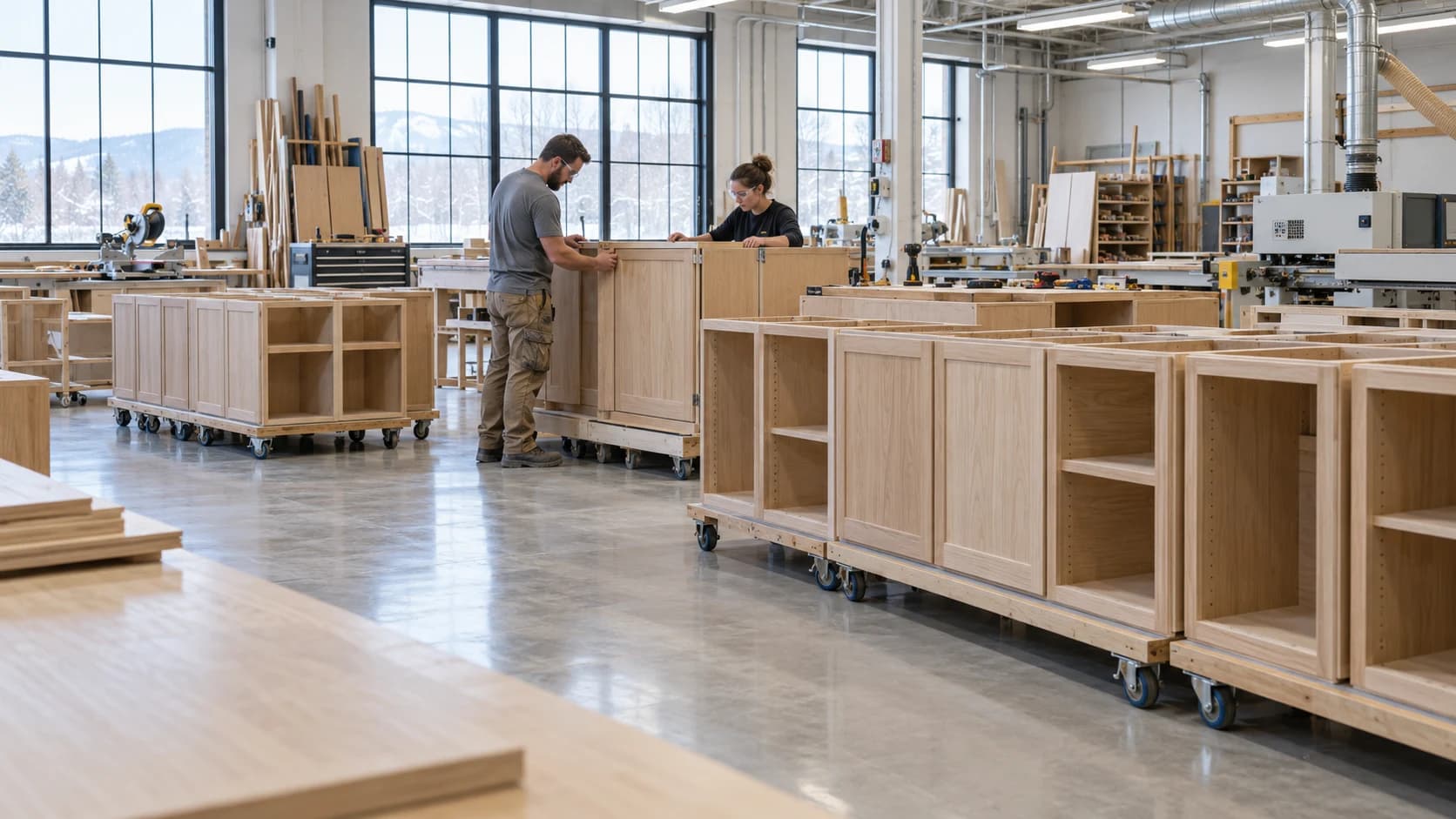
A Cabinet Shop Handoff Checklist From Cutting to AssemblyCutting is complete only when assembly can identify and use the required parts. A finished stack at the saw does not establish that the kit is complete, current, or correctly labeled. Define the handoff around the receiving station's needs.
If one side panel is missing from a ten-cabinet kit, do not mark the whole cart simply complete. Identify which cabinet is blocked and whether the remaining nine can be assembled independently. That preserves useful work without concealing the shortfall.
Review recurring assembly questions with the cutting team. A clearer label or a better grouping rule may remove repeated interruptions more effectively than another status meeting.
The handoff should identify the assembly, revision, expected components, actual components, and any exceptions. Check labels against the traveler before moving the batch. Include grain or face orientation where the next station needs it, along with approved hardware and machining information.
A count of panels is useful but insufficient when several panels look similar. The assembler needs to know which parts belong together and which surfaces or edges have specific requirements. Keep the information attached to the work rather than in an email that may not reach the receiving station.
If a component is missing or rejected, record the replacement action and expected readiness. Decide whether the batch should move or remain at the current station. Moving incomplete work can be reasonable when planned, but it should not conceal the shortage or transfer responsibility by accident.
Have the receiving station acknowledge the condition of the handoff. Repeated missing-part problems should feed back into labeling, counting, or release checks at cutting. The purpose of the checklist is a usable next step, not a signature added after the problem has already reached assembly.
A woodworking schedule is easier to review when the team can see the work already recorded. Millbase Floor Pulse shows active workers, projects, workstations, and elapsed time. Pair it with project records to discuss a delayed cabinet order with the people and work behind it, and compare logged labour with the estimate.
Ask the Millbase AI agent a question grounded in your workspace records. For example: “Who is working on this project, at which workstations, and how many hours have been recorded?” You can select a project or worker, ask follow-up questions, and request supported reports and CSV exports.
Use the breakdown to prepare the next production conversation. Current activity and recorded hours are evidence for planning; they do not by themselves prove that an assembly has passed inspection or is ready to ship.
For the broader workflow and decisions behind this guide, read Production Scheduling for Custom Cabinetry.
Use the lightest acknowledgement that makes ownership clear. The important points are completeness, exceptions, destination, and acceptance, not paperwork volume.
Only when labels and physical separation prevent confusion. If the arrangement repeatedly causes searching or mix-ups, dedicate carts or compartments.

Writing about woodworking, millwork, and the operations behind a better-run shop.
Connect on LinkedInExplore how Millbase connects projects, people, inventory, and labor records.
Book a live demoCustomer Updates Based on Actual Cabinet Job ProgressA useful customer update connects progress with the agreed scope and next commitment.
Archive ·Managing Planned Maintenance in a Cabinet Production SchedulePlanned maintenance consumes capacity and should be visible before jobs are promised.
Archive ·Shift Handoffs in a Woodworking FactoryA shift handoff should preserve the state of work, open problems, and the next safe authorized action.
Archive ·