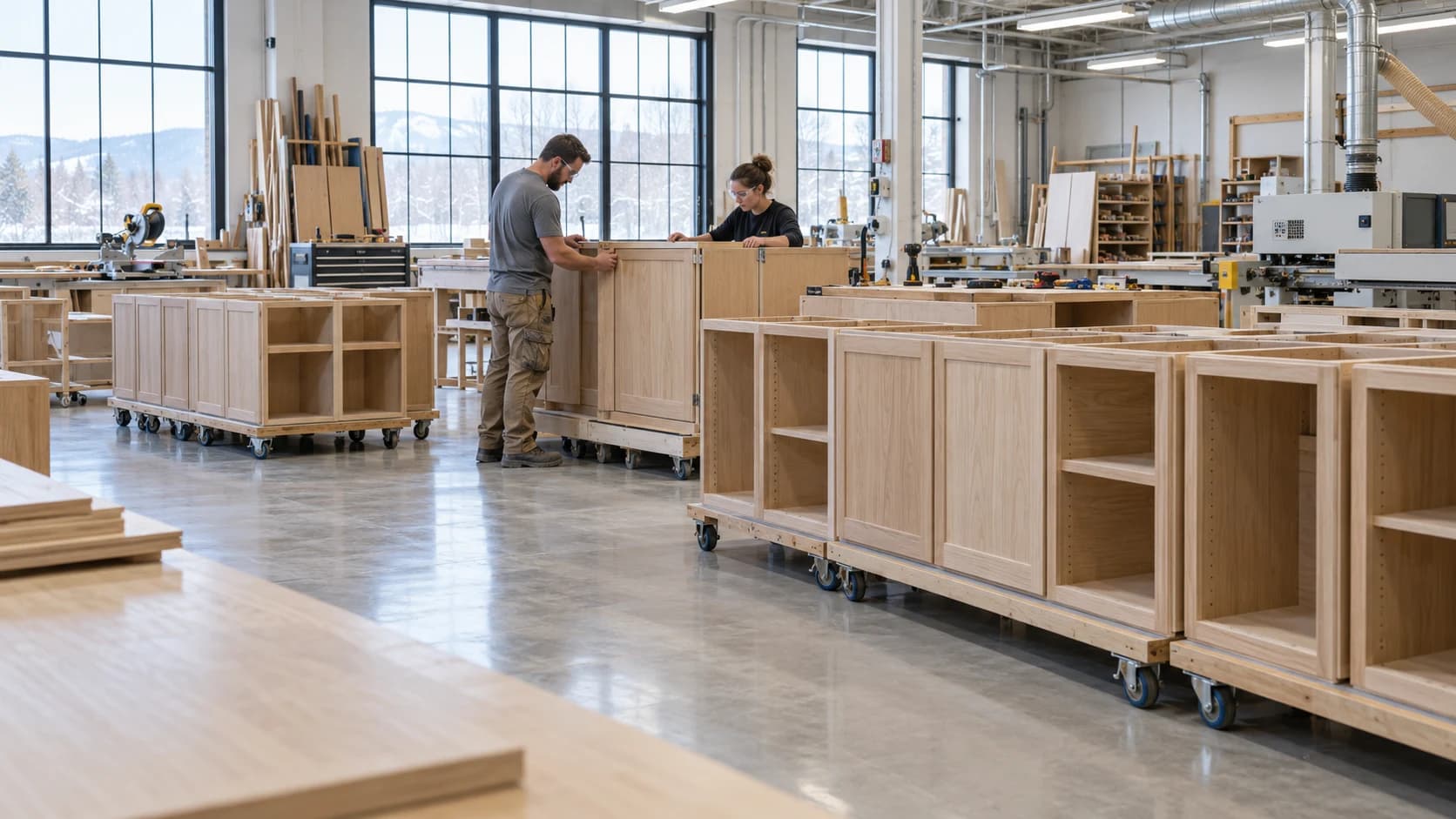
 Customer Updates Based on Actual Cabinet Job Progress
Production2 min read
Customer Updates Based on Actual Cabinet Job Progress
A useful customer update connects progress with the agreed scope and next commitment.
Archive ·Packing by installation sequence helps the receiving crew find what they need without unpacking the entire order.
Packing Cabinets by Installation SequencePacking by installation sequence helps the receiving crew find what they need without unpacking the entire order. Keep job and room identity visible after wrapping. Protection, loading constraints, and safe handling requirements still determine the final packing method.
A hypothetical floor requires corridor cabinets before individual rooms. Loading solely by the order cabinets leave finishing may bury the first-needed units. Review the sequence with dispatch and the installer before packing is fixed.
Give the receiver a manifest that supports package-level confirmation and exceptions. A total truck count cannot establish whether the right room kits arrived.
A woodworking schedule is easier to review when the team can see the work already recorded. Millbase Floor Pulse shows active workers, projects, workstations, and elapsed time. Pair it with project records to discuss a delayed cabinet order with the people and work behind it, and compare logged labour with the estimate.
Ask the Millbase AI agent a question grounded in your workspace records. For example: “Who is working on this project, at which workstations, and how many hours have been recorded?” You can select a project or worker, ask follow-up questions, and request supported reports and CSV exports.
Use the breakdown to prepare the next production conversation. Current activity and recorded hours are evidence for planning; they do not by themselves prove that an assembly has passed inspection or is ready to ship.
For the broader workflow and decisions behind this guide, read Production Scheduling for Custom Cabinetry.
Yes, when the protection method permits. Otherwise provide an external identifier that clearly maps to the contents.
It can, but the manifest and physical separation must preserve room ownership and installation order.

Writing about woodworking, millwork, and the operations behind a better-run shop.
Connect on LinkedInExplore how Millbase connects projects, people, inventory, and labor records.
Book a live demoCustomer Updates Based on Actual Cabinet Job ProgressA useful customer update connects progress with the agreed scope and next commitment.
Archive ·Managing Planned Maintenance in a Cabinet Production SchedulePlanned maintenance consumes capacity and should be visible before jobs are promised.
Archive ·Shift Handoffs in a Woodworking FactoryA shift handoff should preserve the state of work, open problems, and the next safe authorized action.
Archive ·